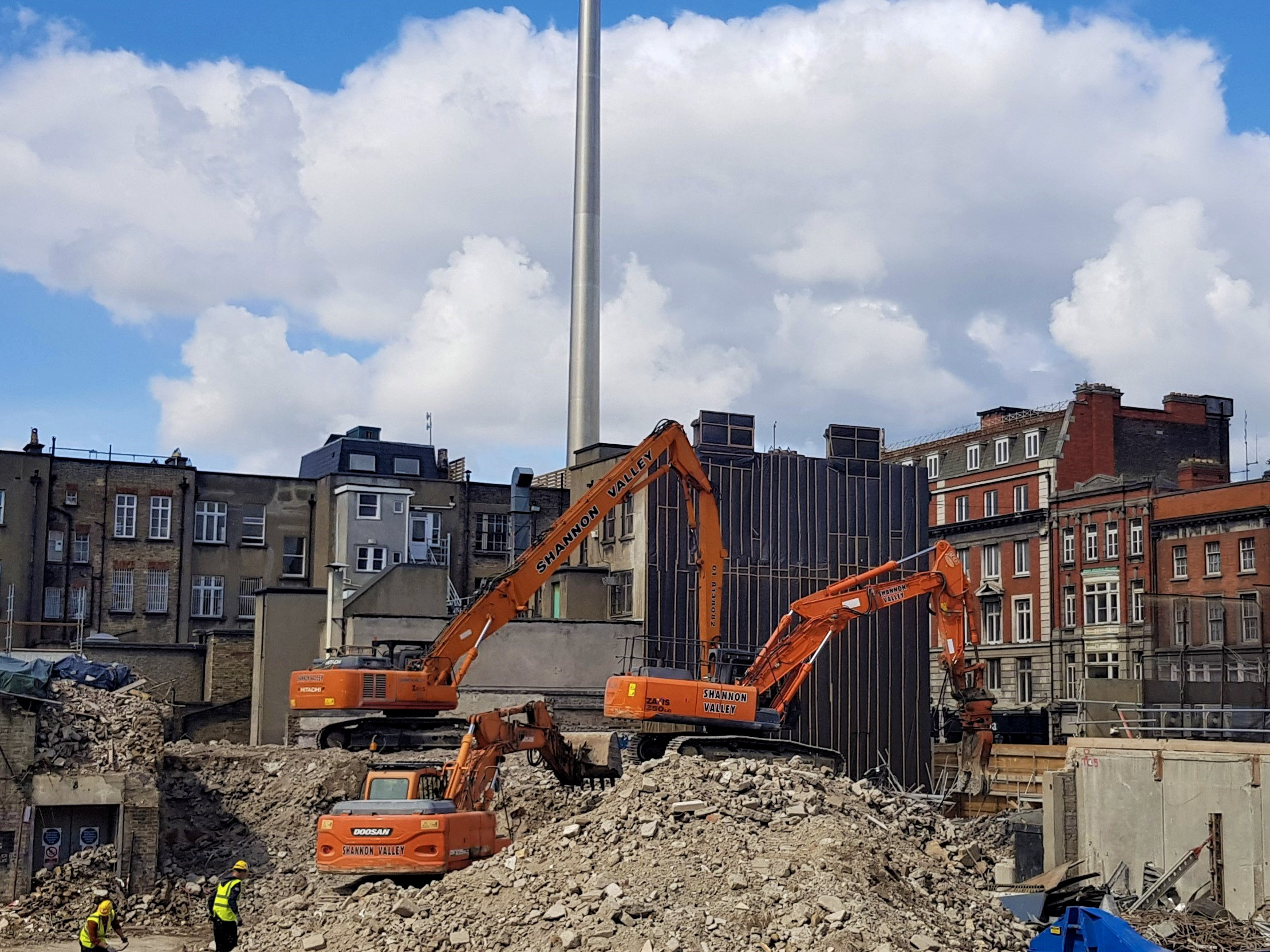
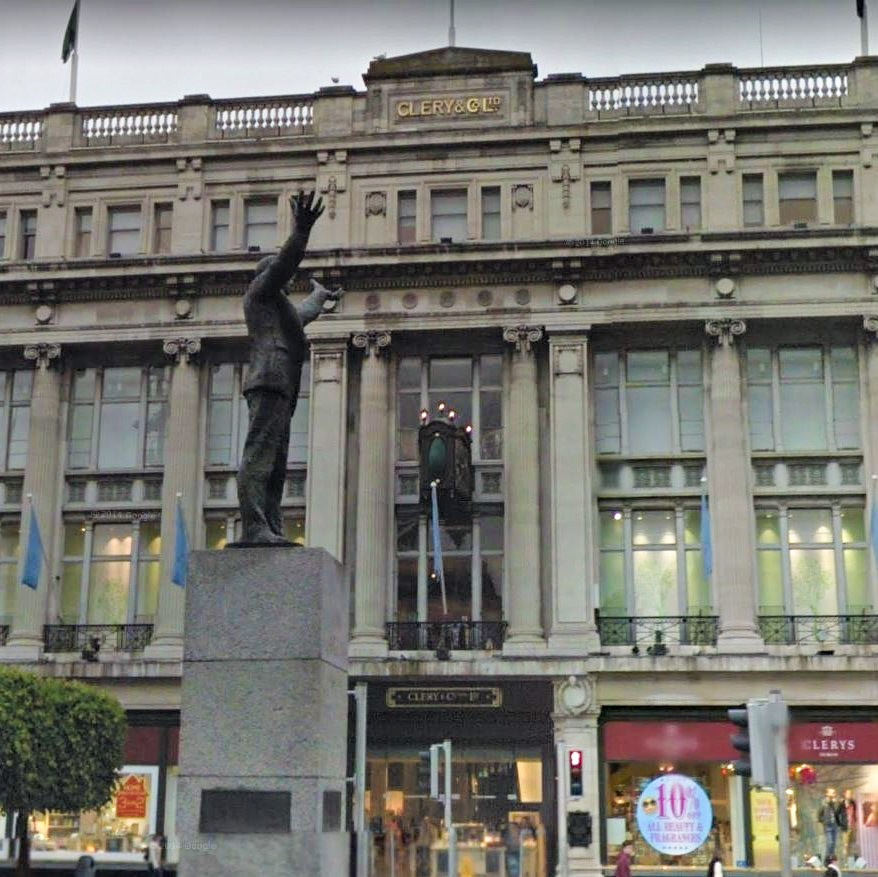
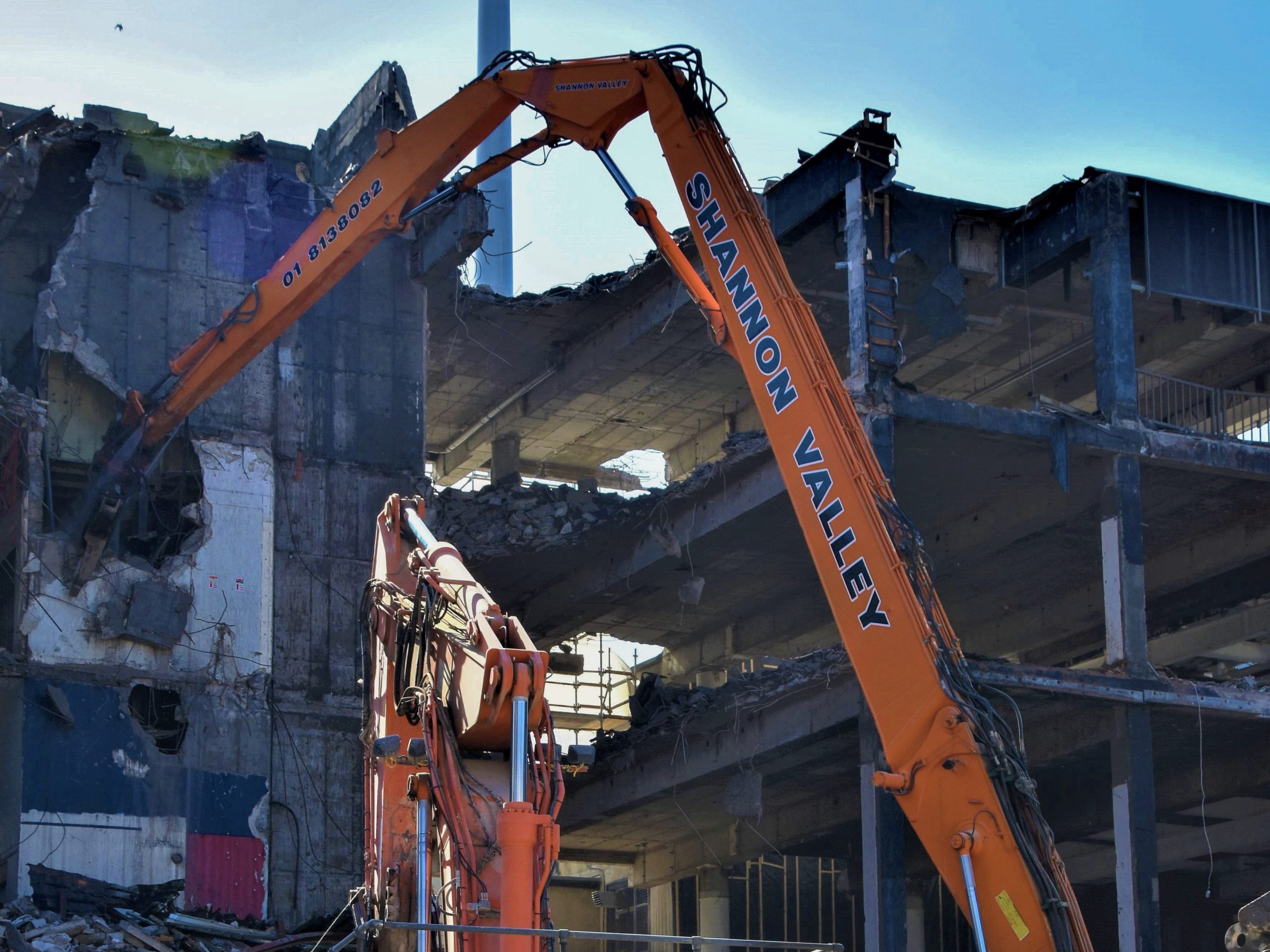
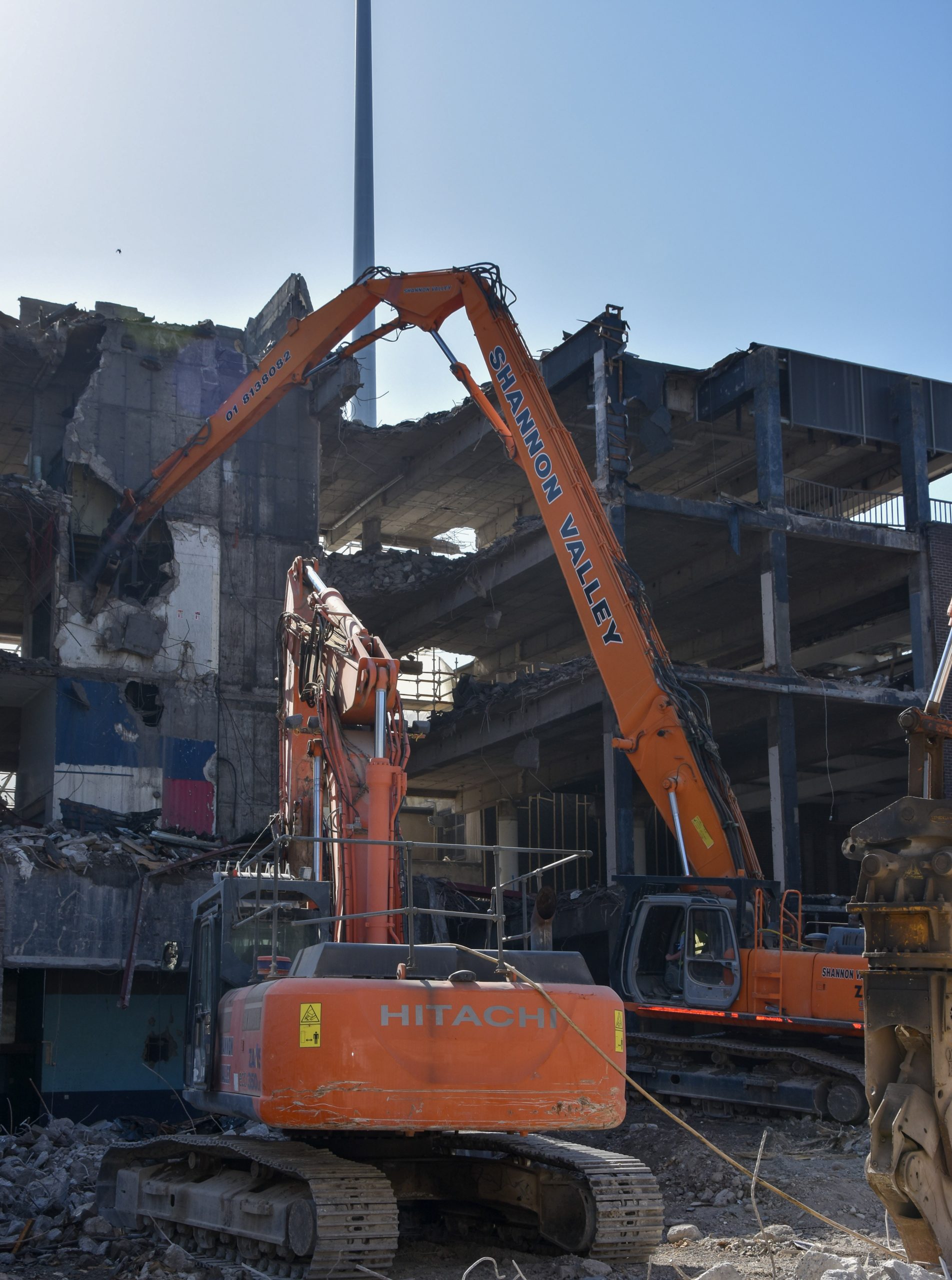
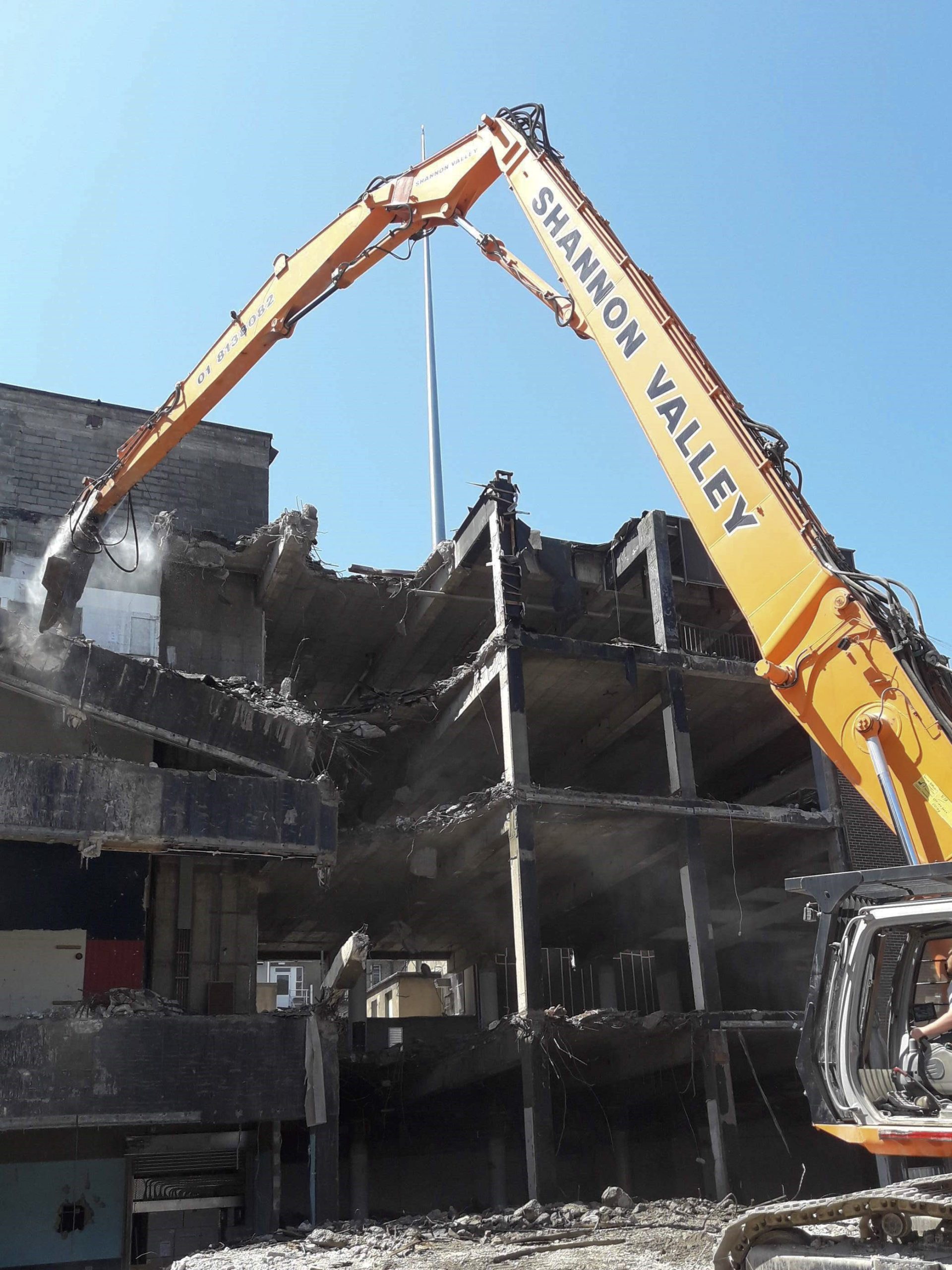
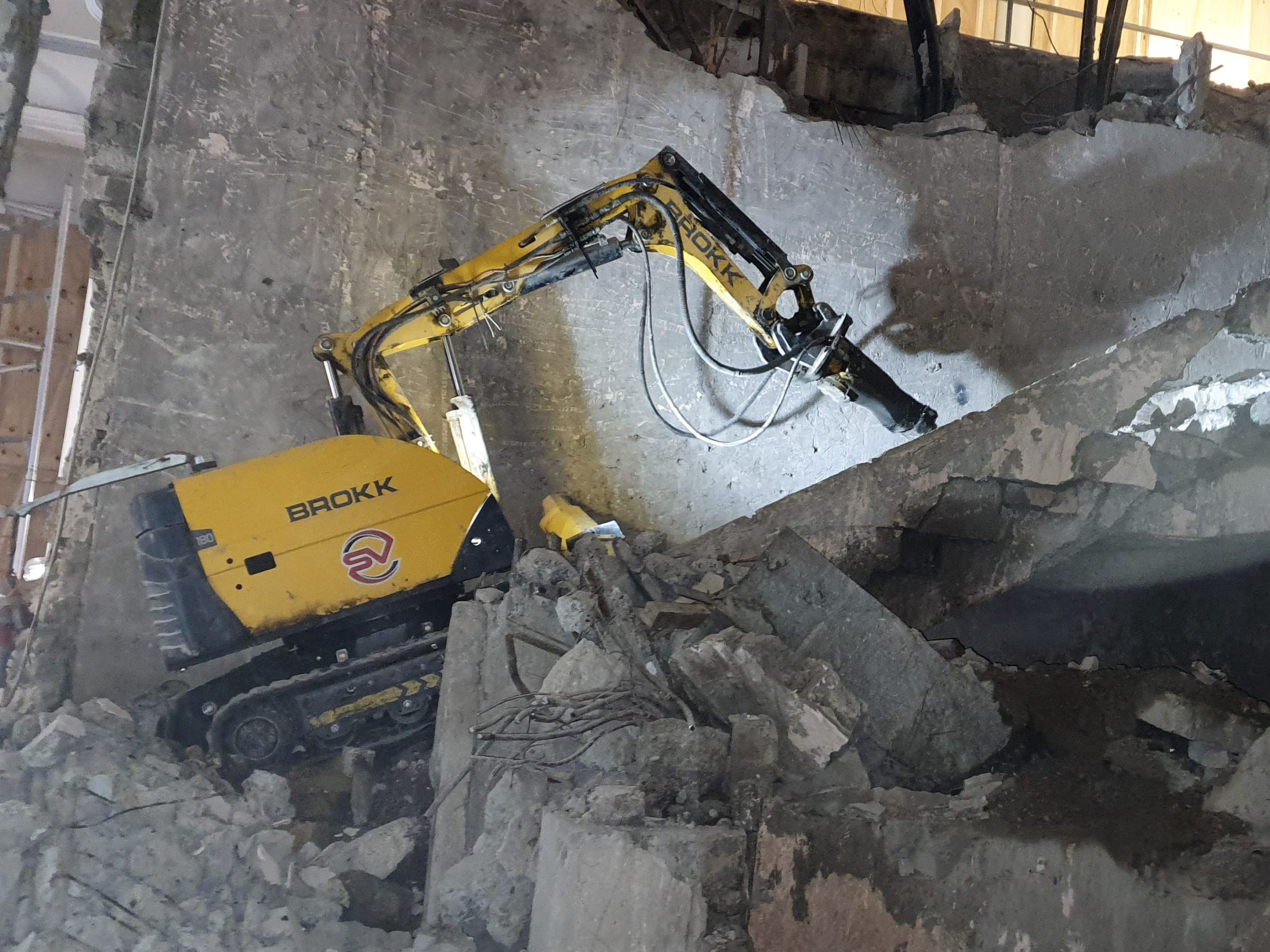
When the iconic Clery’s building on Dublin’s O’Connell Street was built 165 years ago, it was probably meant to last forever, so it is not surprising that ‘surrendering’ to demolition hasn’t come without it’s challenges. Over its long lifetime it has seen many changes; it’s striking façade has been one of the city’s most famous landmarks and will remain so for many years to come as it is being meticulously retained. What lies behind it, however, is being transformed to bring it into the 21st Century. Work on a huge part of the building has been steadily progressing, with dedicated teams from the Shannon Valley which was appointed by the main contractor Glenbrier Construction to demolish the building. The main demolition phase has focused on a number of areas, including two interconnected warehouses which were connected to the original building across Earl Street by a double storey links bridge. The removal of the link bridge and the warehouses was a major challenge as they included a lot of steel encased in concrete which had to be cut, and because of the close proximity to other buildings, including a couple of 18th century Georgian townhouses, some of the demolition work had to be done by hand. Shannon Valley had less than 20 men on this part of the project, but at the peak of the work around 45 were on site, some of them working through the night, using a wide range of equipment – from jack hammers, concrete saws and scaffold towers to excavators, mini diggers and long reach machines. A by-product of such intense activity, of course, is the dust that is created within the confines of the site, and that was successfully dealt with by the introduction of dust suppression systems. Tonnes of material have been transported away from the site on a fleet of artics and rigids, a logistical challenge in itself because of the building’s city centre location, but despite being at the height of the busy tourist season, there has been little noticeable disruption in the surrounding streets and to nearby businesses, thanks to careful advanced planning, constant monitoring and the implementation of rigorous health and safety measures.